C House
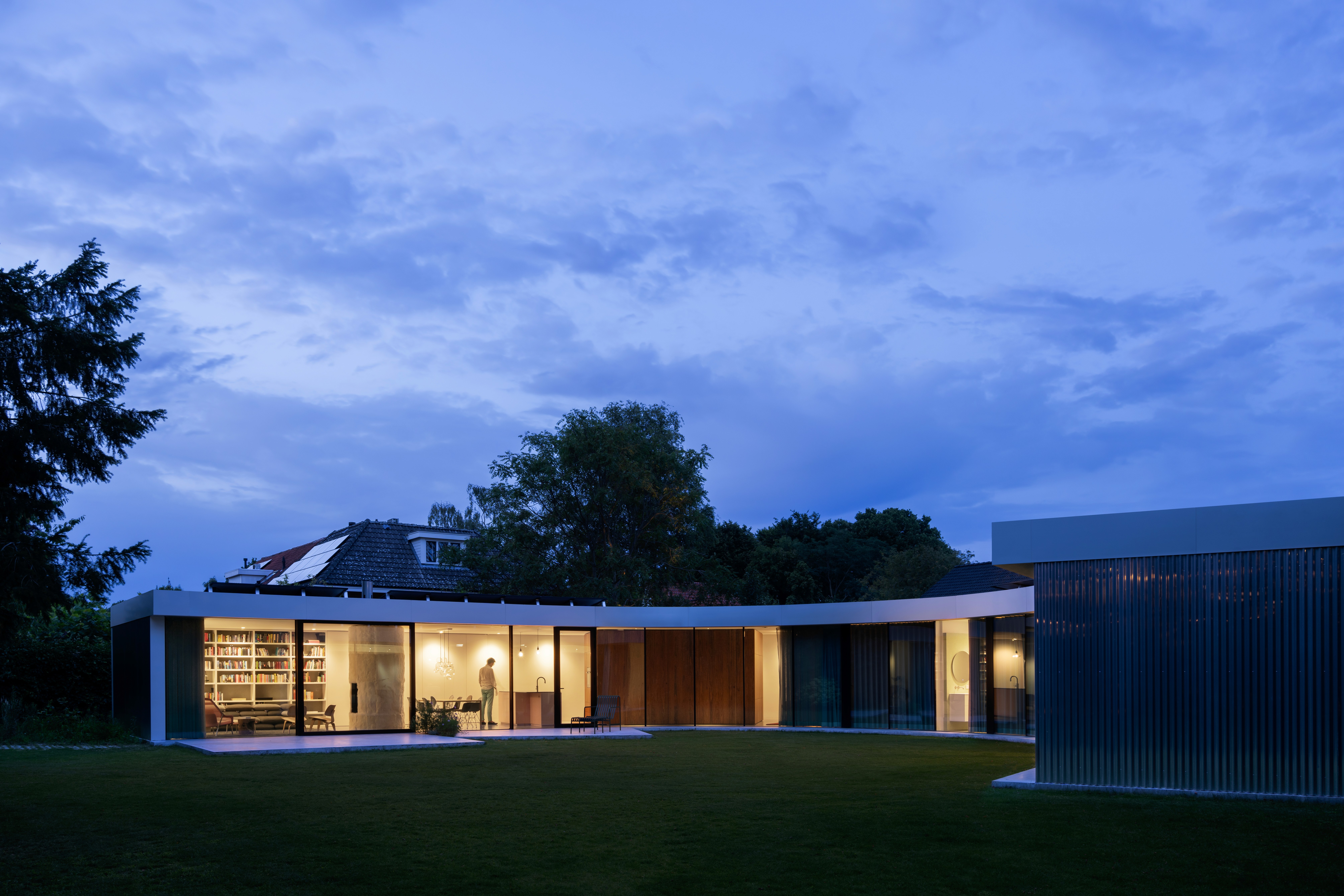
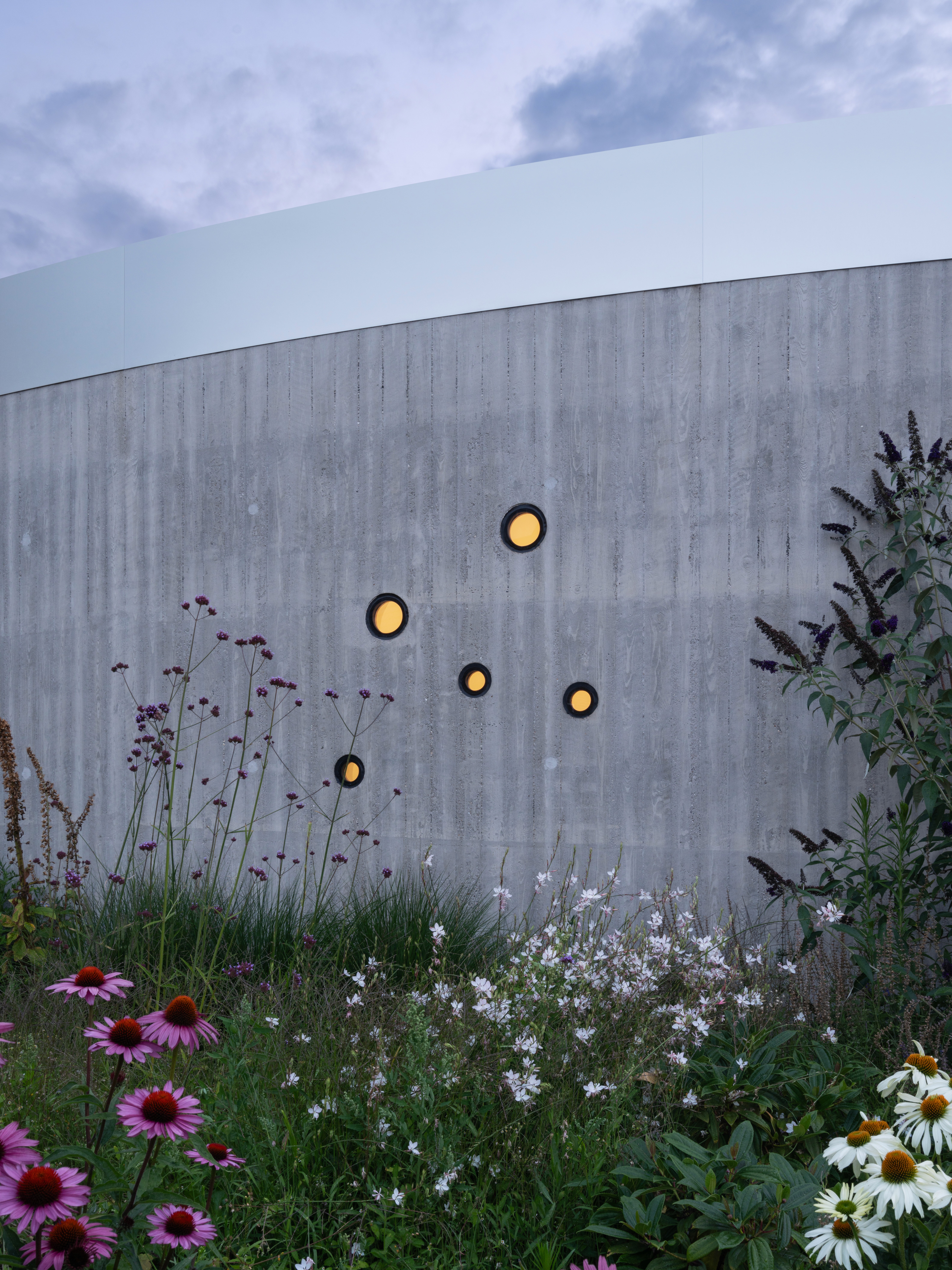
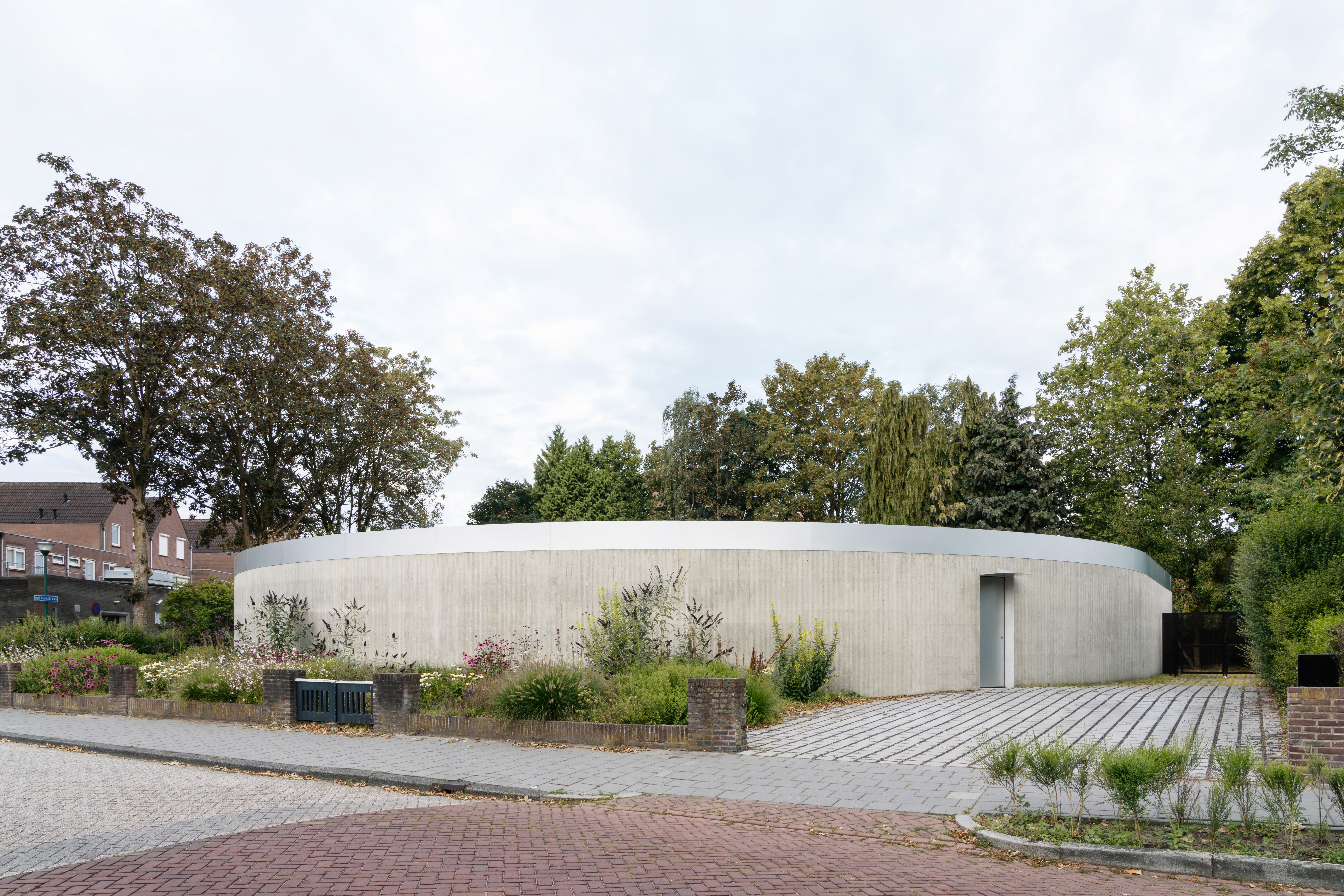
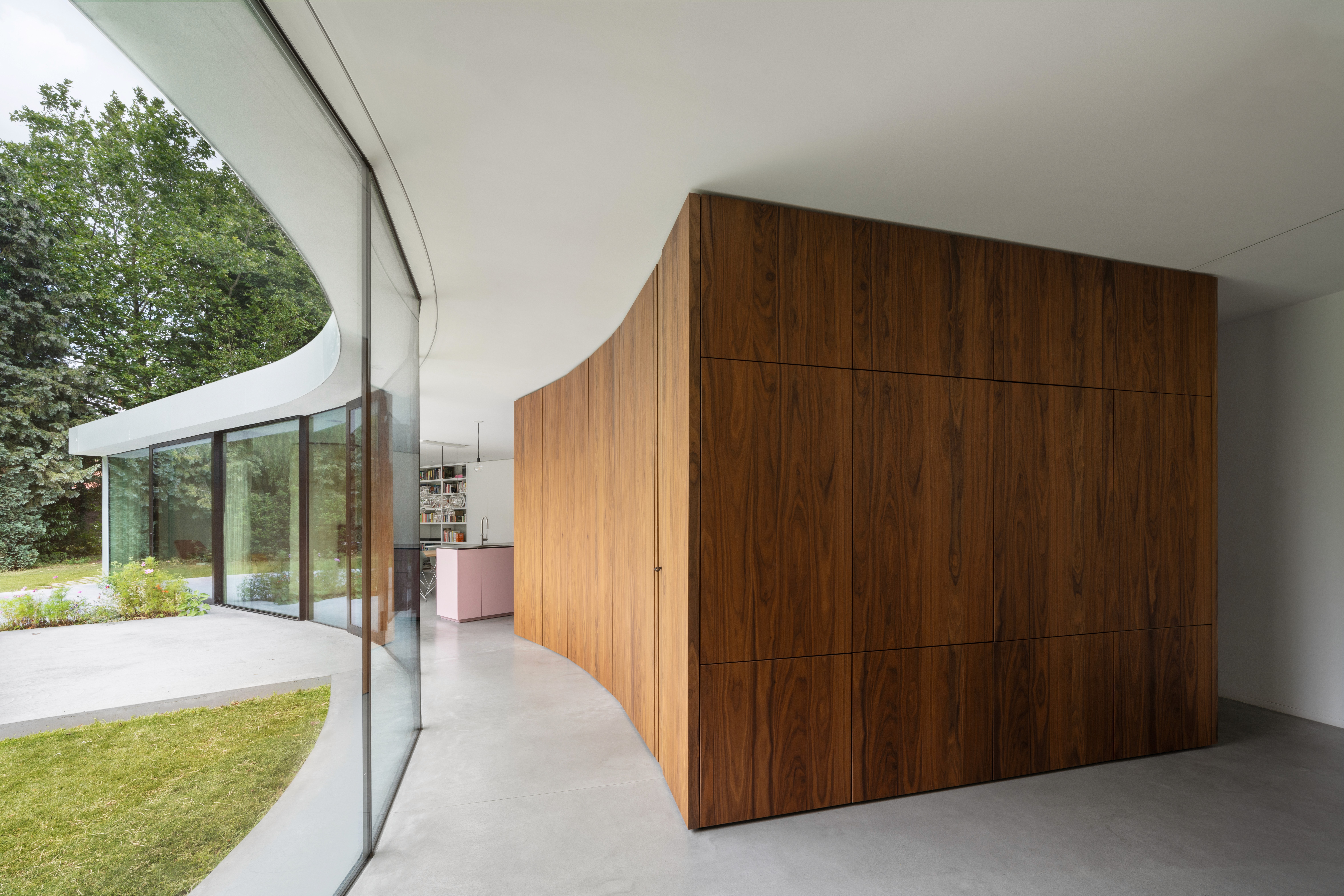
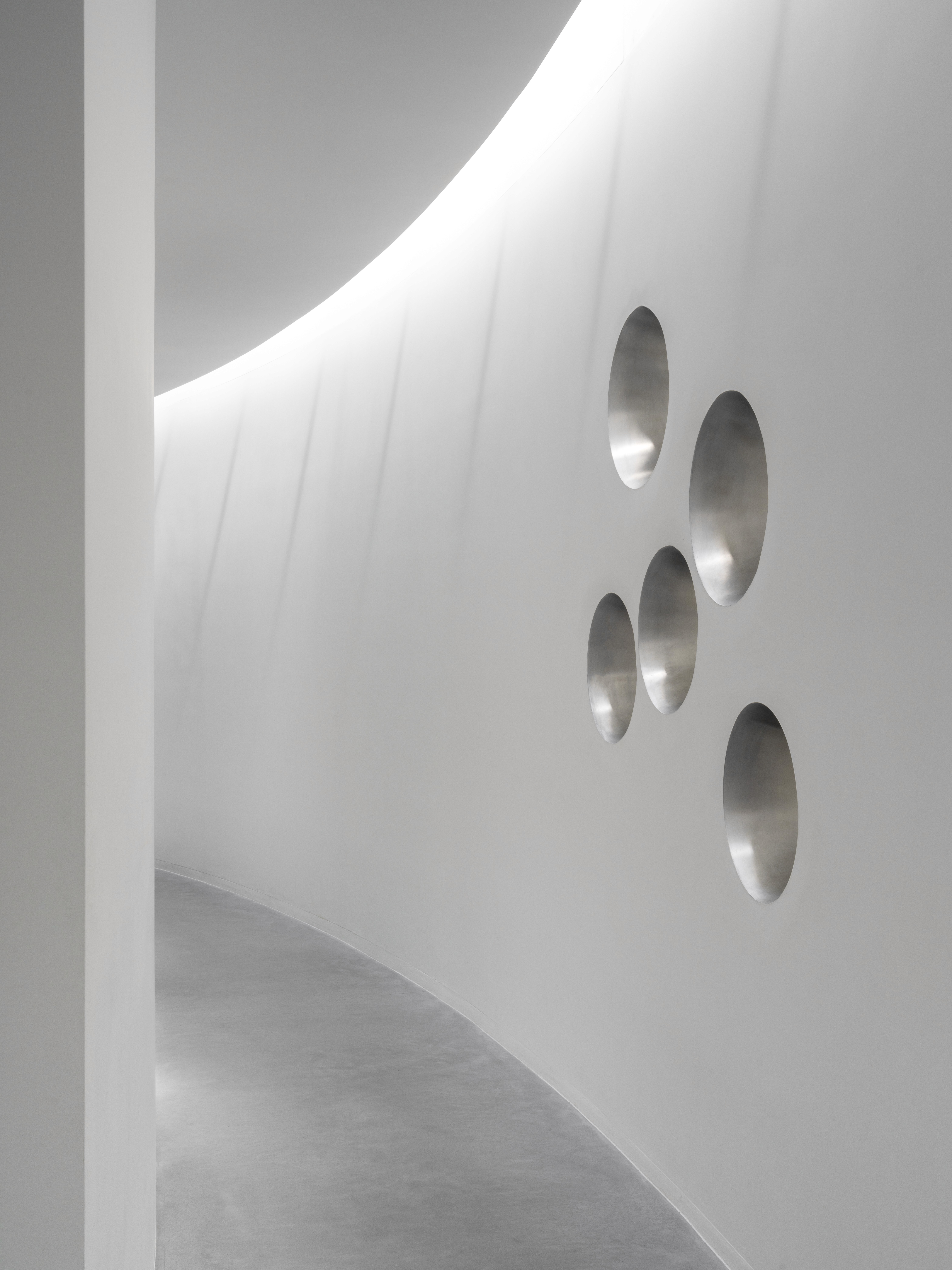
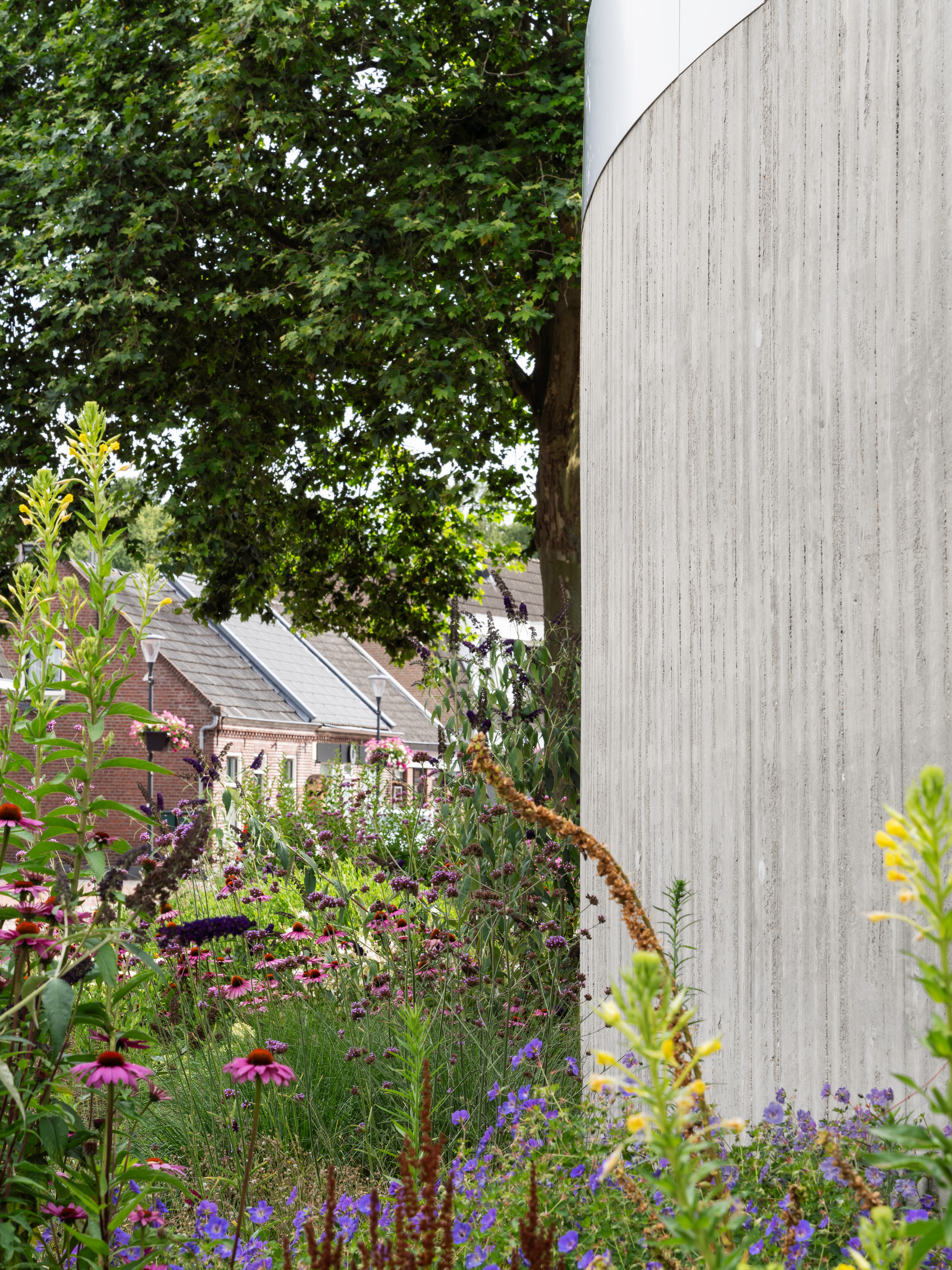
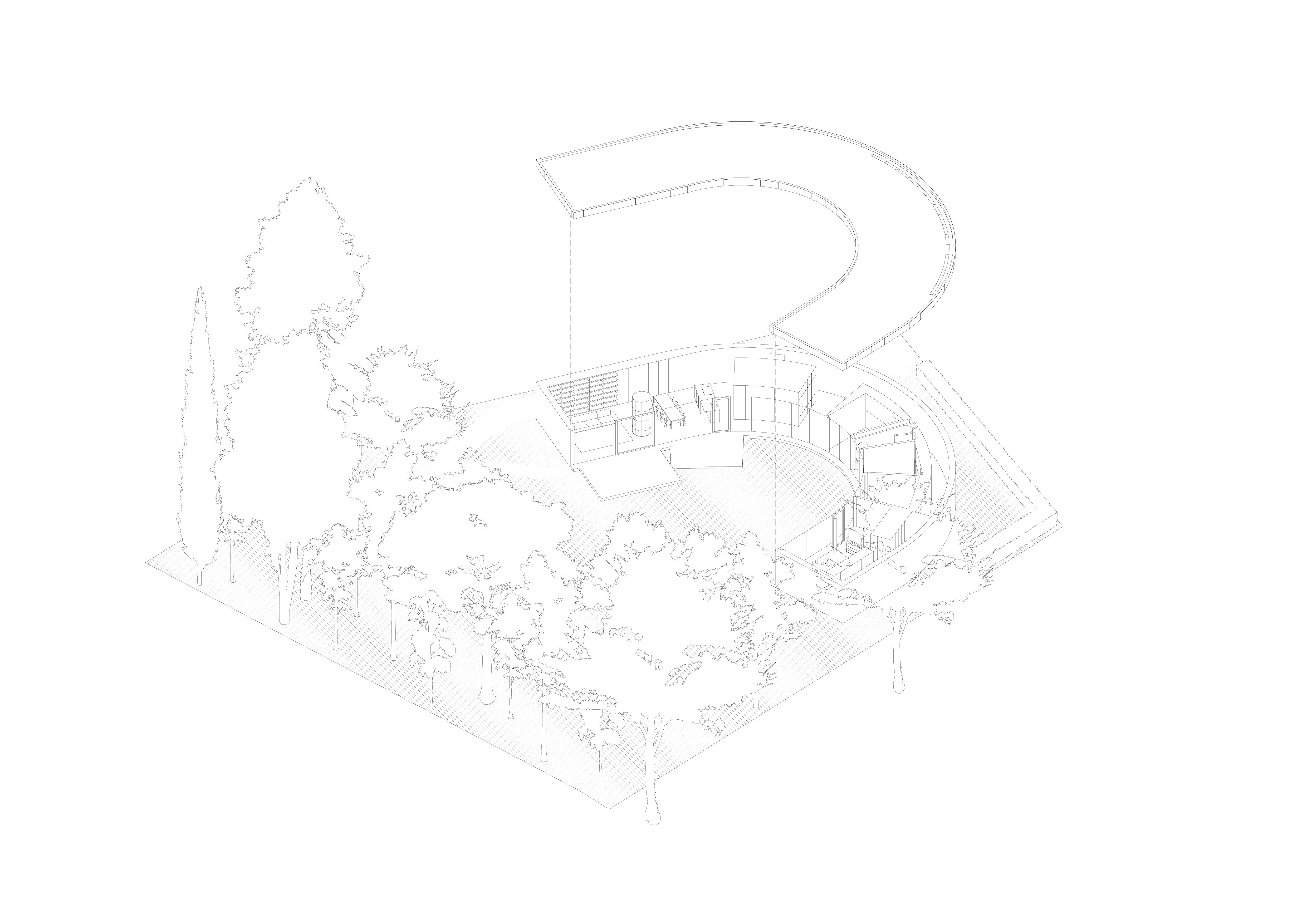
In the center of a small village in the south of the Netherlands, a rare plot offered an unusual condition: complete privacy within a highly public setting. Designed for a family of five, the house responds by organizing domestic life around a lush garden that extends the nearby natural landscape into the center of the site. A continuous shell of cast-in-place concrete defines the perimeter. Toward the village, the house appears closed and enigmatic. Toward the garden, it opens entirely through a full-height glass façade, transforming the landscape into the primary interior. The building frames the garden as the heart of family life, dissolving the boundary between inside and outside. The plan distinguishes between collective and individual domains. Bedrooms are accessed via a curved corridor lit from above, while the shared spaces unfold as an open landscape structured by a series of autonomous elements: a circular fireplace and a walnut-clad service core. This compact core integrates storage, kitchen, toilet, media functions and access to a cellar within a single object. Large mirrored sliding doors allow the private wing to be separated from the communal areas, enabling different modes of occupation throughout the day. Five circular openings puncture the concrete façade. Positioned at the eye level of each family member when they first moved into the house, they transform the exterior into a subtle register of time, scale and inhabitation.